

Runway vs. Real-world: The trends that are worth trying.
Not too long ago, I saw a clip from a runway show featuring a model who emerged in a floor-length cape of feathers and platform boots that could have stepped right off the set of something sci-fi. My first thought was “incredible.” Followed by: “There is literally no way in hell anyone is wearing this to pick their kid up from school.” And that’s sort of the entire tension I want to talk about, because runway fashion conceptually has nothing to do with my real-life closet.
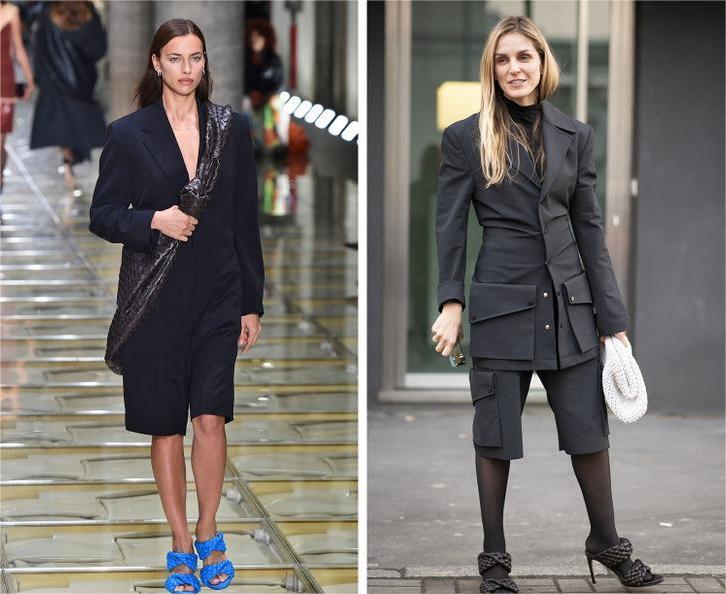
Runway shows ARE NOT meant to be worn as is. Think of it less as a finished piece and more like concept art a vibe, an idea, a guiding principle that eventually gets boiled down into something the average person can wear on a Tuesday. When you learn the process of translation, runway fashion can stop feeling irrelevant to your life, and it can become one of your favorite sources for style inspiration.
IMAGINE: You’ve suffered whiplash from watching runway ideas trickle down or not into the stuff I still see at the mall, on friends, and in my own closet. So here’s what I’ve learned about how to tell the difference between runway theater and runway inspiration, as well as how to actually take bits of a big trend into an easy-to-wear outfit.
The Disconnection Between Runway Fashion and Reality
For the first several times I sat down to watch a runway show, I was truly puzzled over who this stuff was made for. Oversized shapes, ridiculous textiles, and garments that felt as if they were created to be photographed and not worn anywhere.
But once I learned more about how the fashion industry really works, it made so much sense. Runway shows are kind of a marketing device, partly an art form and also a way for designers to set the tone or direction for an entire season. They are not meant to be worn as actual ensembles for brunch. They are to get attention and coverage and define a brand image at best.
The real wearable clothes the stuff that goes to stores are much later, when designers and retailers translate the spirit of the runway into edited, sanitized versions. A show-stopping feathered cape transforms into a faux-fur-trimmed coat. A very much padded, architectural shoulder becomes leaving one on your comfortable blazer’s shape. Even if the literal garment does not, the idea survives.
My First Ever Go At Recreating A Runway Look: What Went Wrong
Let me disclose an early error; I think it’s a mistake almost everybody can make. I recently had a melodramatic show with oversized everything enormous sleeves, outsized proportions, and patterned on patterned hues that left me itching and buying many pieces, pretending to recreate just the same. An oversized blazer, a busy patterned top, and wide, loud-colored trousers!
I wore the entire get-up once. Once. Pretty much too much for a real day out. I just wore a costume and spent the entire time pulling down sleeves, feeling self-conscious instead of comfortable.
What I learned from that flop can be boiled down to one simple lesson: runway looks are not typically meant to be worn whole. Choose one piece not all of them and let the rest of the outfit go simple.
The Real Path to Making Runway Trends Wearable
When I began to pay closer attention to this translational process, a clear pattern emerged. This is more or less how it usually plays out.
An illustration of a dramatic and extreme piece by a designer on a runway show The fashion media gets wind of it and writes about the “trend” it stands for. Then, some months later, retailers and lower-end brands produce simpler, watered-down versions. And by the time they make it into regular shops, the original wild creation has often been filed down into something an actual person can put on without flinching.
Which is why you can often see that a runway show in one season will inform you that you’ll start to be able to buy at retail about six months to a year after that (and much more sedately). Being aware of this pattern has allowed me to anticipate trends rather than just responding months later when I see them in stores.
Step by Step: This Is How I Bring a Runway Idea Into My Real Closet:
And that’s why all the previous tips were a waste of time; here’s my actual process that I use now if I see something on a runway that excites me but isn’t wearable as is.
Step 1: Find the concept (not literally the clothing). Instead of “I need that dress exactly,” I ask myself what is interesting about the piece. Is it the color? The silhouette? But an esoteric detail, such as a big cuff or an odd neckline?
Step 2: Find the simpler version of the equation. Once I know what the core idea is, I search how that will be interpreted into more wearable pieces about a season or two later by scouring mid-range retailers. Most sites like Zara and H&M are quick to catch the trends on the runway, often translating a much more affordable version of wearables.
Step3: Contain it as one piece. I pick one thing that embodies the concept and do not attempt to replicate an outfit. If the runway gold pulls were bold sleeves, I would want one top or dress with a unique sleeve and not the whole outfit in fussy aplenty.)
Step 4: Wear it with calm basics. The drama piece takes center stage, and everything else is simple, neutral, and comfortable. This is the step I omitted in my oversized-everything disaster, and it’s the one that provides 99 per cent of the impact.
Step 5: Test the waters in a low-stakes environment. Before I wear a bold runway piece somewhere important, I try it out on a day just like today to see how it really feels to walk around in the world wearing it.
Step 6: either adapt or ditch it if it’s not working. Like, sometimes even a simplified version of a trend doesn’t suit me or my life or my body, and that’s perfectly fine. Just because a top is trending lately doesn’t mean it needs to find a permanent home in my wardrobe.
Lessons Learned from Runway Ideas That Ended Up in My Closet
So to make this a bit less abstract, here are a handful of runway ideas that I’ve really worn on real-live bodies.
A season in which sheer, layered fabric was prominent on the runway turned into a sheer blouse from a more affordable retailer that I now wear over an un-embellished tank for dinners out. It was basically a completely sheer-layered version with nothing to wear underneath which, of course, wasn’t something I could wear in real life, but the concept of layering sheer survived in far more practical form.
The exaggerated, quasi-architectural shoulders on the runway became a single blazer I owned with an ever so slightly built-up shoulder line (nothing like the drama of those original shows!), but enough for me to achieve that bold silhouette.
An 11t Trend: I wore a single bright sweater in my closet paired only with neutral pants and shoes to the full-on head-to-head looks and combinations based on block palettes that graced runways. ProperColorTypeI was so sick of wearing dark skinny jeans, almost desperately, upon arriving in NYC.
That runway season of big brooches and oversized vintage-inspired jewels turned into one secondhand pin I added to a coat already in my closet.
The extremes of the runway version never made their way into my closet, but there was a clearly upward trajectory towards sheer layering, strong shoulders, bright color, and statement jewelry in every case.
Tools And Resources That Helped Me Build The Bridge
This made the translation process significantly easier to understand and act on, thanks to a few key resources.
In that same way, seamlessly scrolling through full collections on Vogue Runway’s online archive instead of only catching a glimpse at a few viral photos gave me far more insight into the attitude of a season than one caught-out-of-context image.
This is where Pinterest was great again, in the sense of looking at how such stylists or everyday people were taking one particular runway trend and making it into an outfit that can be worn (as opposed to just saving the photos from the original show).
That’s why, especially in the beginning of my career, with an eye on it a little wider than just sifting through outfits of a runway, mid-range players like Zara, H&M, and Mango also became my best place to find future “translated” looks (a season or two after the real deal) these brands move fast and quickly translate trends without overcomplicating them.
The YouTube videos that dissect fashion week, especially those that lay out what was great or abhorrent about a season’s dominant looks rather than just playing a tape, educated me on the why of things with a trend, and these latter specifics made sense of how I could change it.
It was one of the most useful style tools I have: a simple habit of screenshotting runway looks I liked and then searching for similar, more wearable pieces later in the season.
Mistakes to Avoid When Trying Trends Inspired by the Runway
I have made many mistakes relative to runway ideas, and sharing them seems more useful than only describing what worked.
Choosing one look and trying to reproduce it instead of taking an element My getting things oversized disaster happened because I attempted to wear the entire premise at once instead of selecting a single piece with which to interpret.
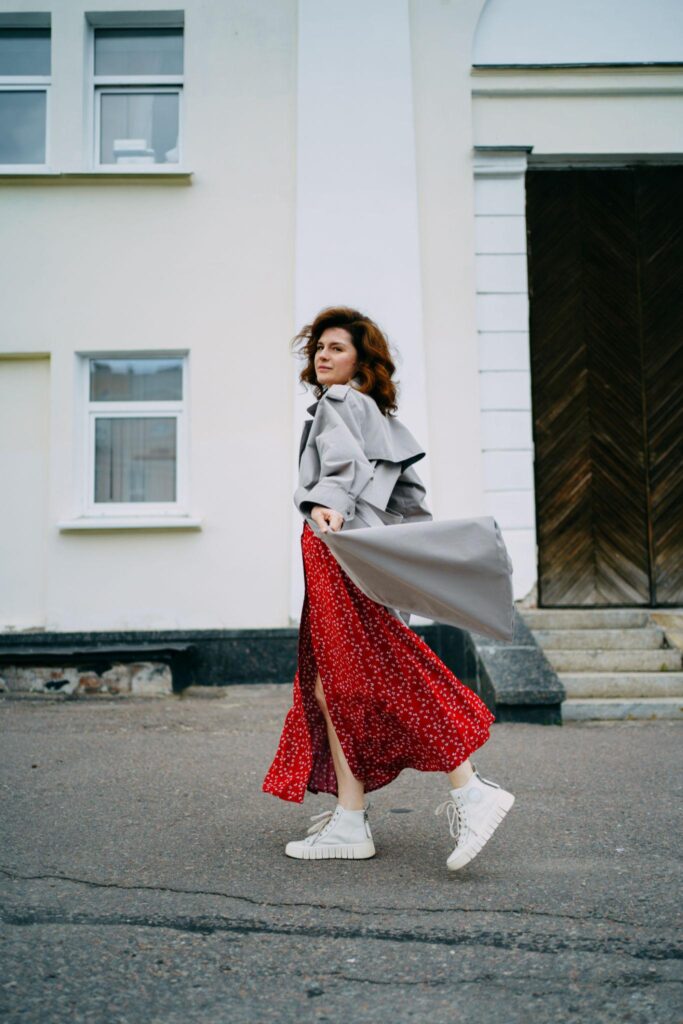
Buying the first translated version I could find without checking quality. Fast fashion retailers are very good at stealing runway ideas, but the quality of construction and fabrics can be wildly inconsistent. I ended up running out of time because I bought pieces before checking reviews or fabric details only for some of them to fall apart after two weeks!
Because a runway trend would fit my real life. Truly, some runway ideas are really beautiful but do not translate well to a life filled with commuting, desk jobs, and grocery shopping. Before I start shelling out money, I’ve learned to ask myself if the thing I’m about to buy is going to contribute to an empty space in my wardrobe or if it just looks cool when showcased on video.
By copying a look exactly, regardless of my own body and proportions. Not everything that looks incredible on a runway model will look the same on a completely different body, and that’s not an issue with the trend or my development, simply something to consider before buying based on proportion/having it.
Attempting a trend too late after it has already been translated. Some ideas were so fast-moving by the time they fully filtered down into mass-market stores that they had already had their moment and were on their way out again. I’ve also learned that if something really sparks my interest, I should try it out in a low-cost way first rather than waiting for the “perfect” piece to come along.
A Runway Trend That You Know Is Actually Worth Trying
It turns out not every runway idea is in my closet’s plan, and I’ve become choosier about which ones I even bother pursuing. Now before getting too excited about yet another translated trend, I ask myself a few things.
Does it fill an immediate hole in my wardrobe, or am I just getting caught up in the newness of it? A lot of my favorite items inspired by the runway, such as the brooch and the sheer blouse, really filled a gap. I needed my outfits to start having a little more character and wanted some dressy options that still felt practical.
Can I still see myself wearing this through an entire normal day, not just a five-second reel? If the honest answer is no, I leave the trend as it is, a thing to admire rather than something to purchase.
Does this idea come with a price tag in my budget and with things I already own? I tend to avoid chasing a trend that is going to force me to build my entire closet around it. I search for the one that fits into what I already have.
Final Thoughts
The feathered cape and platform boot pair that I referenced at the top never found its way into my real-life closet and it was never intended to. What did make it through, eventually many outfits later and in a more composed state was an obsession with sartorial textures, pleats, and statement pieces that I’ve honestly enjoyed intermixing into my daily wear.
So runway fashion isn’t isolated from reality. That is simply another language, one that must be translated ahead of it being meaningful based on an actual Tuesday. If you watch for the ideas beneath the spectacle rather than dreaming of wearing it, runway shows become an actual inspiration source, not just something so far away it’s a total fantasy. Choose one idea at a time, wear the rest of your clothes simply, and then let the runway do what it is actually for: giving you something to be excited about before it ever has to make sense.