

Fashion Guidelines to Break When Finding Your Personal Style
We all have that moment you stand in a dressing room and love something, but then you put it back down because some half-remembered “rule” says do not wear Maybe it was mixing prints. Perhaps it was something so simple as white after Labor Day. Someone might told you at one point, your shape just doesn’t do horizontal stripes.
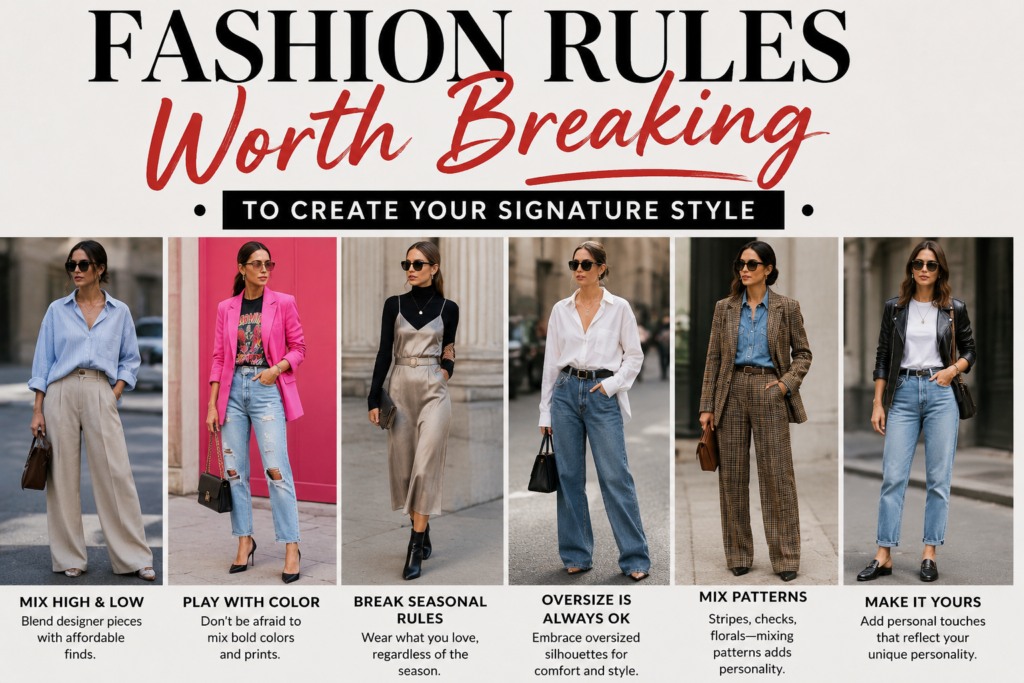
Once I returned a beautiful cobalt-blue blazer after reading somewhere that redheads should not wear blue. And I still think about that blazer. It was perfect. And I hung it on a rack at TJ Maxx because it (I later learned) was against an imaginary rule.
And that’s the nature of fashion rules. Many of them have little to do with taste or logic. They stem from tradition, obsolete social norms, or someone with something to sell needs his opinion stated as often as possible until it sounds like an edict. And those with the best lives, to die for карточки? They broke most of them.
Here are the rules you need to unlearn and what to do instead.
Rule Number One: “Dress For Your Bodytype”
This one is a classic and definitelythe most draining of all the style rules. Pear shape? Wear A-lines. Apple shape? Empire waist only. Rectangle? Add volume at the hips.
I mean, these clothes are restrictive but the real kicker is that they assume the whole point of dressing up is trying to get as near a hourglass shape as one can. And most of us gave up believing a long time ago that was something we should all be aspiring to.
Dressing for how you feel is the better way to go; not how other people see you. You love wide leg trousers, and somebody said it would make you look shorter, wear the trousers. Wear the jacket if you want a cropped portion, but your midsection offends you. Clothes that are styled to feel sexy looks better on a sofa in whatever room, as opposed to a technically “flattering” outfit you can put on your invisible self.
Alternative Simple Approach: So next time you go shopping, just try things on that you normally might skip due to a body rule. This is why 95% of the time, you will be surprised that you’ve chosen the wrong thing, but it actually looks exactly how it should.
Rule #2: No Mixing Metals
For years, the rule was choose one metal and stick to it. Day 1 gold jewelry, day 2 silver. Never together.
And then they started to mix them together pairing a gold chain with a silver cuff, layering rose-gold rings with platinum bands and it looked great. In hushed whispers, the fashion world owned that the rule might be stupid.
In fact, mixing metals gives a curated, purposeful feel. It indicates that you’re not just doing matchy-matchy, and you’ve put thought into your clothes. The trick is not to fret over what metal you mix with what it’s about using any one metal twice and repeating it, so that the look is purposeful instead of accidental.
Such as: gold hoops + silver cuff + gold ring Seeing as the gold is repeated for two dials, the silver comes off as an accent rather than a deterrent.
Find out what metals to avoid: Failing Example: Wearing three different metals in the same ratio. Two is fine; three starts to seem unintentional.
Rule No #3: Black and navy are both bad
This one really stumped stylists for years. The rationale was that two dark colours of sufficient similarity would fight with one another, being close to but not identical in colour.
Except… they don’t clash. They work together to create a sophisticated tonal look that has become one of the most revered pairings in minimalist style. French dressing, specifically, has gone hard on black–navy pairings for years. White Oxford with a navy blazer it flows naturally into black trousers and never looks like you got dressed in the dark or vice versa: A classic black turtleneck under your navy suit.
The trick is to ensure that the fabrics differ enough in texture so that the pairing registers as intentional. An example is a matte navy knit paired with an almost glossy black trouser; leaving enough space for each color to be appreciated.
Rule #4 not to mix prints
This is the one rule that scares people most and it’s also the one that, when broken properly, results in some of the best outfits.
Even if the genesis of this “rule” was probably that no one wants a print-mix that looks like chaos. And it can. However, there is an easy framework for combining prints that works in almost all cases:
THE SCALE RULE: Wear large-scale print with a small-scale print. Like a large flower with a narrow stripe. When the scale of prints is different, they do not compete for eye attention.
The color bridge: Both prints should share at least one common color. A floral with red in it will always look intentional over a blue stripe, even though the prints themselves are completely different character.
THE ANCHOR: Keep the bottom half in a solid or near-solid if you’re nervous so the eye can rest somewhere.
Some actual wear: leopard print (which is a neutral, in fashion people terms) crossed with thin gingham check A plaid blazer polka-dot top tucked in. Graphic skirt with striped top
After you get used to it, Mixing prints is one of the quickest way to create unique style because most people still won’t do it.
Rule #5: Casual and Formal Slang Cannot Mix
There was a time when it seemed as though an entire outfit had to exist within one dress code register all casual, or all formal. The best outfits are when you mix the two together
A white button down with the motion of jogger pant. Silk slip dress with white sneakers+denim jacket. A formal blazer paired with a comic-print t-shirt. In this case, the point is the contrast itself and so these combinations work. This creates an effortless modern feel a tension that doesn’t seem try-hard.
So if you’re dealing with a vague dress code a “smart casual” work event, or dinner when you just do not know how dressy it really is. Pairing one dressy piece with one casual piece tends to put you right in that sweet spot.
What trips people up: Going too hard in one direction. Sneakers with a formal silk midi skirt need to be clean and minimal: chunky dad sneakers with a gown is not an easy look to master unless you’ve genuinely thought long and hard about it. It works well, only when both are good quality materials.
Rule # 6: Wear Your Size (And No Oversized)
It seems like for a while even in those early 2000s fashion advice was always just “wear clothes that fit.” The implication that pajama-like anything oversized or slouchy was sloppy.
That mindset has been almost flipped on its head. The oversized silhouettes, borrowed-from-the-boys tailoring, and decidedly roomy proportions are now among the chicest options you can choose. An intentionally big blazer with skinny pants is chic in a manner that a perfectly-fitted blazer occasionally isn’t. It has personality.
The important distinction is between deliberately oversized and unwittingly baggy. A long trench coat with intent belted or flung open over something slinky on the inside is a statement. The shoulder seam should nearly touch the shoulders instead of taut across or slumping lower down the back.
To wear oversized pieces successfully, consider the balance. Pair a voluminous top with a streamlined bottom. Tuck in or crop the top if the trousers are baggy. For outfits that are layered, one big piece tends to work better than two.
Rule #7: Do Not Wear the Same Clothes
This one isn’t exactly so much a style rule as it is a type of social anxiety pretending to be one. The assumption that wearing the same wardrobe two times, especially to events where people might view photographs, was somewhat undesirable.
Which is, honestly, ridiculous. And increasingly, people know it.
The best-dressed wear their finest pieces on repeat. That is how you really create a signature: Wearing the things that you love over and over, in different variations. Three ways to wear a great pair of wide-leg black trousers in one month says far more about style than 30 different outfits worn once only.
Outfit repeating is one of the most sustainable things you can do. SAVE : Fashion is the second biggest polluter, buying less and wearing more is one of the most impactful moves you can make.
In practice: by using apps like Stylebook or Whering, you can take pictures of your closet, plan outfits and see real data on what you’re getting (or not getting) out of everything in your closet timely. Are there pieces you reach for time and time again?
Rule #8: Have you Bag and Shoes Match
This one lingered all the way around until the 2010s. The matching bag-and-shoe set. It always looked coordinated. It rarely looked interesting.
Pairing your shoes and bag with complementary contrasting colors a neutral bag paired with black boots, or bright colored clutch with plain heels gives an outfit more flow and character. Everything else is put together, so dressing just got a little more smarter since you won’t be hunting for an specific item to wear with another specific one.
The only time matched feels purposeful is when it’s blatantly so a monochrome fit, the entire outfit sharing a color family down to the bag and shoes. That’s a statement. The matchy-matchy bag will be camel because the shoes are camel, but nothing else in the outfit is close to a light tan: that’s the stiff and dated part.
Rule #9: Never Depart from “Your” Colors (Via Seasonal Color Analysis)
The trend of seasonal color analysis the belief that you are a “Spring,” “Autumn,” “Winter,” or Summer” based on your skin tone, and must restrict yourself to your prescribed palette re-emerged on social media in recent weeks, with TikTok deep-dives turning it into a kind of religion.
Well, it has an actionable takeaway: Knowing what undertones complement your natural coloring can help with efficient shopping. However, the most difficult law to violate and the most valuable violation is that you cannot wear colors outside your season.
I have also seen “Winters” look gorgeous in a rust color (which is just another warm terracotta). There have been ice-blue “Autumns” which may have been the most gorgeous plant I ever saw. Your good feelings about the colors that resonate with you the ones that sing to you, that wake you up when worn — are never wrong according to some color wheel’s idea of your undertone.
Consider seasonal color analysis to be a guideline rather than an edict. It helps you narrow down your options. It shouldn’t restrict them.
That signature style you always wanted to build (practically)
It is half of your knowledge knowing which rules to break. It requires some practice to do, especially when you have dressed by the rulebook for literally years. Here’s how to start:
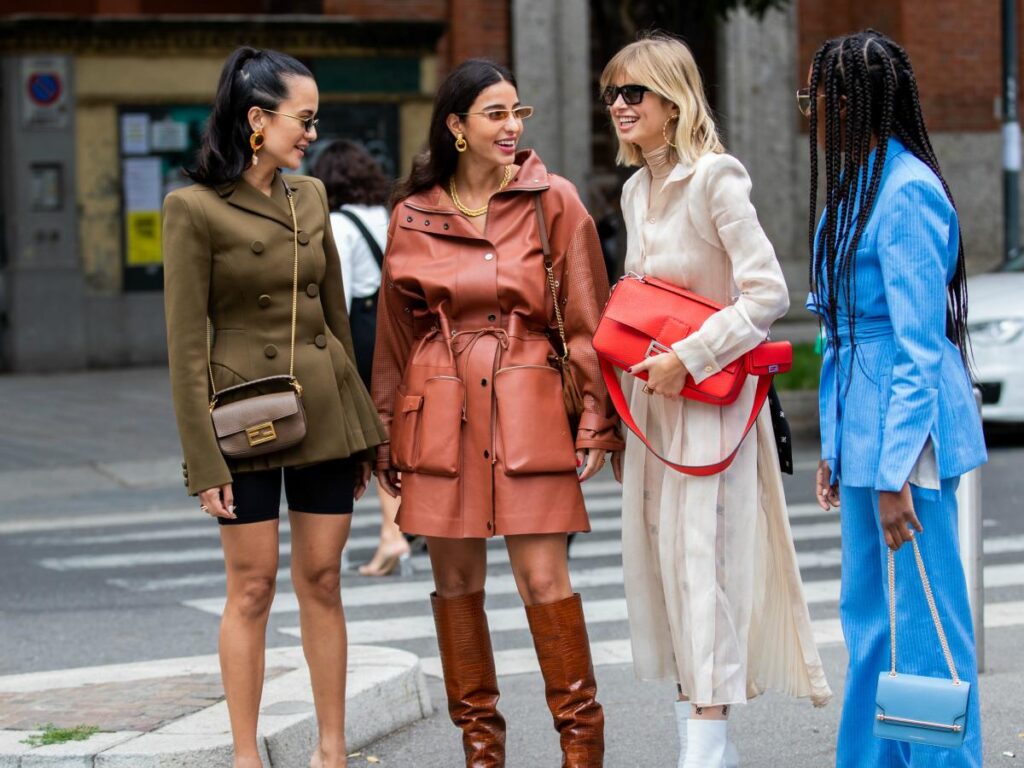
1. Audit what you actually wear. Go through your closet and remove everything that you have worn in the past two months. What patterns do you notice? These are the backbone of how you DO style: not those aspirational pieces with tags on.
2. Identify your anchors. What part or element continually appears? Some Color, A Shape, Some Fabric? This is where you build your foundation with intention.
3. Break one rule per week. Don’t overhaul your whole wardrobe at one time. So the next time you get dressed, just try to break one rule wear two prints together, wear that color you rarely try, mix metals. See how it feels.
4. Take photos before you leave. Seriously. The camera roll on your phone is now a style journal. You will observe what works, what you felt good in and what repeat patterns emerge with the outfits that you loved.
5. Stop waiting for the occasion. RELATED: The No. That dress you love, that blazer which is a bit over-the-top put it on right now. To the grocery store if that is your desire. The way the best things you own wear into your life, rather than become a trophy you hang up somewhere.
Why People Mess Things Up When They Throw The Rules Away
Ignoring everything might as well be bad, but breaking rules effectively is not ignoring them. Things to look out for:
Defying rules instead of lusting for them. It is not about your fashion rebellion it is about wearing what you actually love. But if you are not into mixed print, you do not have to wear it. The point is not to substitute an equally rigid anti-rule for that rule, but instead remove it as an obstacle.
Not considering fit. Virtually every style “mistake” that carries some weight of ugly results from fit, not the breached rule. An imperfect-fit suit that violates all the style guides is going to look better than a perfect-fit one that follows every single one of them.
Overdoing it at once. It will be interesting to break one or two rules for an outfit. Even for those with great personal style, breaking six at once can be daunting. Develop your look incrementally.
Caring too much about other people’s opinions I know this may sound obvious but this is the hardest one. You’re gonna love what you’re wearing, someone will tell you it doesn’t “work.” But they and everybody else are not wrong to have a position. But it doesn’t have to land.
Final Thoughts
This is exactly what personal style as in, your own is designed to be. The rules, the body types, the color matching and the metals and the seasonal palettes were created by an industry in order to sell more product and backed up by a social convention that encourages people to conform. Neither of those forces has your welfare (or the welfare of others) at heart.
The ones who are known for their look not because of celebrity status, but because they enter a room and its vibes are unmistakable have almost always made it by way of ignoring the rulebook, paying more attention to themselves. What makes them feel good. What they keep returning to. What at 7am on a random Tuesday makes them feel the most like themselves.
Wear the thing you love. Step out of the molds that binding you away from it.