

A few years ago I literally stood in front of a wardrobe crammed with clothes and had nothing to wear.
Not in the angst-y, teenage-dramatic sense of the word. I mean it literally. I had, maybe, 60 pieces in there and if I really examined them with unbiased neutrality, 8 of those actually saw any wear because they fit well and looked good and made me feel lovely when I went out the door. The latter were also impulse buys, sale rack mistakes and clothes I held onto “just in case.”
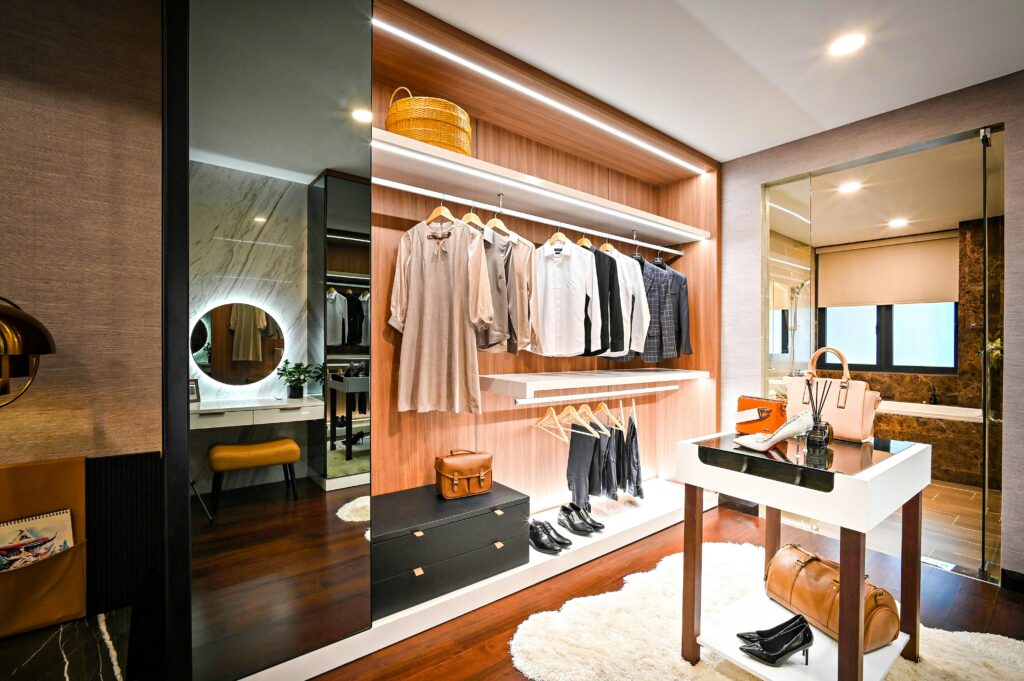
A few years ago I literally stood in front of a wardrobe crammed with clothes — and had nothing to wear.
Not in the angst-y, teenage-dramatic sense of the word. I mean it literally. I had, maybe, 60 pieces in there and if I really examined them with unbiased neutrality, 8 of those actually saw any wear because they fit well and looked good and made me feel lovely when I went out the door. The latter were also impulse buys, sale rack mistakes and clothes I held onto “just in case.”
I was trying to get dressed for a work presentation that morning, and went through three different outfits, hated the look of all of them, became more stressed before I even had coffee in my system, wore the same black trousers + white shirt combo I’d worn by default three times that week already…
At that point, I realized it was time to learn how people actually dress well not how they wear ‘trendy’ clothes but more about how they put together functional clothing. What I found surprised me. It wasn’t about spending more. It was more about getting more value out of our spends, this would be possible if we started with clear metrics and not in a sense purely quantifiable metrics but removing the clutter holding everything down.
This guide is about everything I learned, the hard way and not so hard.
THIS Is Why Most Wardrobes Fail (And It’s Not What You Think)
Now before we get into what to buy, let’s first talk about why the majority of people’s wardrobes constantly fall short — because addressing the root cause is way more important than any shopping list.
The larger issue is not a lack of clothes. It’s a lack of cohesion.
But when you buy things one at a time, following trends or buying what is on sale, you accumulate orphaned items. How about that orange blazer you bought simply because it could stand on its own two feet? It does not match with one other thing that you own. Dead space in your wardrobe and most of us have a lot more than we know.
The second issue is buying for who you want to be instead of who you are in this moment. We’ve all done it. Buying a gym kit with gym hopes. That special dress purchased for some occasion that never actually comes to pass. The weekend trip hiking boots you swore to wear. Those things accumulate, physically and emotionally occupy space within our homes, and leave you feeling guilty every time you see them.
The third one and this hurts is holding onto clothing that you don’t fit into. Be it aspirational sizing, denial after the weight has come off or pure sentimentality; the quickest way to derail how you look and feel are ill-fitting clothes. Give me a £30 shirt in the perfect fit over a f£300 one that fits badly every time.
Step 1: The Honest Audit (Do Before Making Any Purchases)
Pull everything out. Yes, everything. Lay it all on your bed.
This isn’t fun. But it is the single most helpful thing that you can do. So what do you ask for each one?
Does it serve me in this moment as I am today? Not, “Once I lose a little weight,” not, “It will loosen up.” Right now.
Have I worn this in the last year? If not, why not? Be honest.
Does it coordinate with at least 3 other items I currently have? If all it does is work as a stand alone look then you are losing flexibility.
Does it make me happy to wear it? The latter is most important, a fact most style advice ignores.
Organize everything into three piles: Keep, Donate/Sell, and Maybe. The Maybe pile goes into a bag in your closet. Give it 30 days. Also, if you do not use it, donate it.
Apps such as Depop, Vinted or ThredUp (in the USA) are actually awesome for selling clothes you no longer wear. The first time I did this, I recouped about £200 then used that money to invest in the better pieces. That honestly felt like the most rewarding wardrobe upcycle I have ever completed.
Step No. 2: Determine What Your Lifestyle Actually Requires
This step is skipped all the time, resulting in wardrobes full of beautiful things you never wear.
Now, really consider how you spend your time over an average week. Not the perfect version the imperfect one.
How many days from an office vs working from home vs outside?
What do you do in the night hours? Pub with friends? Netflix on the sofa?
Do you travel often? What kind?
Do you have any regular events that make it easier to plan around weddings, date nights, family dinners?
Once you plot this out, essentially you can visually see how much of your wardrobe should be allocated to each part of your life. In fact, the income will touch if you were to look at it and the pattern because if you work from home four days a week, you almost require an outfit which is more smart-casual or casual than formal. You do not need six formal dresses if you have two weddings a year, but they can be styled as differently as needed.
Besides, most people call it an occasion wear nd dramatically over buy while the actual everyday stuff that you are going to reach for Monday through Friday you end up buying next to nothing.
Step 3: Start by Building Your Capsule Core
The capsule wardrobe talk has been done a lot and that’s because it works if you don’t complicate it.
The conception is rather bare-boned: a few layers of versatile quality things that go together. What you include depends on your lifestyle (see Step 2), but here is a solid backbone for most people to work off of:
The Non-Negotiables:
Dark, well-fitted jeans they can go casual and dressed-up depending on what you pair with them
Plain trousers (a neutral navy, grey or camel depending on your palette) unless you work in a professional setting
White and/or light blue shirt the most versatile piece of clothing on this planet, period
A timeless plain crewneck or V-neck jumper in a neutral shade grey, navy, camel or cream.
A tailored blazer not necessarily formal, but still provides an elevated feel to any outfit
Decent white t-shirts not the £3 Primark ones that go grey after five washes; good quality white t-shirts. As for the Uniqlo Supima cotton are always a safe bet
Dark, smart more leather or sneakers the chameleon of shoes able to do double duty between casual and smart-casual
1 classic leather belt: The belt should match the tone of your shoes.
If you are looking for women (Women Add-On or Substitute)
A wrap dress or midi dress in a plain or subtle print you can wear forever
A tight blazer or long cardigan
Neutral colored ankle boots
That’s it to start. You’re talking maybe 15 to 20 in total. A stylist could easily design you 30+ different outfits from these. Not accumulation the goal is multiplication.
Step 4: Take Shape Understanding (This Is Everything)
I cannot stress this enough fit matters! This is the largest difference between someone looking stylish and someone looking like they put on clothes.
If a £15 supermarket tee fits you correctly, you can actually look fantastic. You can blow £300 on a designer shirt that hangs like a sack from the shoulders and appears to have been designed in the dark.
What to look for:
Shoulders, your shirt or jacket shoulder seam should just sit right on your shoulder bone. Too big, it should droop past it.
Chest/Torso: Should skim the body without pulling. The buttons aren’t pulling; the fabric isn’t billowing.
Trouser break A little break (where the trouser touches your shoe) is classic. No Break (cropped a tad) is contemporary. Having too much material at the ankle is always undesirable.
Sleeve length: You should be able to see a little cuff about half an inch or so beyond the jacket sleeve on a shirt.
Jeans: Your jeans should be at the natural waist or right below it and not need a belt to stay on.
An incredibly underutilized part of your wardrobe is tailoring; if you find pieces that you like but the fit is just off, get it tailored. Taking a shirt in at the sides is roughly £15£20 at most local tailors. Getting jeans hemmed is £10–15. It’s these little investments that completely switch up the way a piece looks and feels.
Step 5: Use a Consistent Colour Palette
This is the magic trick of people whose outfits always look polished, and they can hardly even explain why their wardrobe makes the cut.
Select 3–4 base colours that you enjoy, complement your skin tone and harmonise together. Next are 1-2 accent colors to incorporate through accessories or statement pieces.
A classic example:
Bases:** Navy, White, Grey, Camel
Accents:** Burgundy, forest green
If your closet is within this palette, everything goes with every other thing. Getting dressed becomes easy. You cease asking yourself in the mirror why things look “off” they clash.
A good starting point for determining what is suited to your skin tone is the idea of the warm versus cool undertones. Earthy colours olive, camel, rust with warm white tend to be good for warm undertones. Jewel tones navy, emerald, burgundy, crisp white are colours which usually best enhance the cool undertones. There are many quick online tests (the vein test on your wrist is one of the most cited), or you can just try things out and see if a colour makes your face appear fresh or flat.
Step 6 Split your expenses between money well spent and money wasted
You are trained until the year 2023 October. It’s about spending strategically.
Worth spending more on:
Outerwear (coats, jackets) they get worn all the time, out there for everyone to see should last years
Shoes (good quality leather lasts far more than cheap alternatives and good shoes literally make any outfit)
Blazers and structured jackets: Construction quality is key, cheap ones dont keep shape well
A really good bag
Fine to spend less on:
Uniqlo/H&M Basics/Marks & Spencer(12) (for vests, basic t-shirts, underlayers not many brands do this bit well.
Trend pieces wear something trendy that might not survive the test of time, save your money
Casual loungewear
When you invest in quality staples, the maths actually work out in your favour. That £200 coat worn for 8 years costs you £25 a year. A £60 coat that fades, goes out of shape and bobbles within a year-and-a-half is actually more expensive in the long run — and probably looks worse all the way through!
Your Step 7: Shop with a Make-believe list (nothing too fancy)
This sounds boring. It is also genuinely transformative.
Any time I go to the shops without a shopping list and just see something that looks good in the shop it ends up an orphan piece. I have made smarter decisions each and every time I shopped with some kind of list in mind of what specific gaps I am filling.
Write down what do you actually want before shopping. Not the vague stuff “a nice top” but the specific stuff “a plain white fitted cotton shirt, size 12 to wear with my navy trousers and dark jeans.”
In the shop (or online), before you sway impulse-browsing for a new fragrance, check yourself: *Does this fill a gap on my list? At least three things I already have in my closet? * If you answer No to either, put it back.
Apps like Stylebook (iOS) allow you to take photos of your entire wardrobe and create outfits digitally. In fact, it may be one of the single best things you can do to figure out what you’re really missing before handing money over.
Common mistakes (Including me)
** Pick up clothes on sale “because it’s a deal.Pick A great deal on something you would never buy at full price is still a garbage bill. Even at that discount, it would not be a good buy。
**Chasing trends too hard. A wardrobe based around trends goes out of fashion so quickly that it constantly needs replenishing and never feels quite right trends are great as accents, in the form of a trendy colour scarf or a particular shoe silhouette
*Neglecting care and maintenance. No fabric can hide the fact that it is pilling, wrinkled or faded. Buy a fabric shaver (Philips does a nice one), steam rather than iron when you can, use washing instructions instead of devolving to 60° washes on everything.
*Buying “aspirational” sizes. Buy what fits you now. If things change later a tailor can almost always take in; new is always an option. But you can’t wear something that doesn’t fit today.
Fewer options = Better choices It’s the opposite. Decision fatigue is real. A smaller, more curated wardrobe allows getting dressed to be faster and easier and more enjoyable.
The mentality around “cost per wear”.
The one mental shift that changed how I shop entirely cost per wear.
Let the price of it be divided by how many times you will actually wear it. A £250 cashmere sweater worn 80 times within three years £3.12 cost per wear. A fashionable top costing £30 that is worn 4 times before looking out of fashion £7.50 per wear.
This does not mean, always BUY expensive products. Buying things you would actually wear frequently, for a long time. That calculation equally applies to a £25 well-fitting t-shirt that will get worn 100 times.
On Personal Style Vs. Following Rules
Above all is framework, not law.
Your style should in the end always feel like you. Others love colour and pattern create a brighter, louder capsule. Some are the type of people who are into black, grey and white minimalists, and they run with it on point.
The rules concerning fit, cohesion and quality members applies to everyone. However, the aesthetics are all yours.
Your eye gets trained by noticing those instances when you feel really great in the outfit. Not being complimented (although that is nice) but when you look at yourself in the mirror and find peace with how you look. Pay attention to the similarity between those outfits. That’s your style, giving you a heads up about its business.
Final Thoughts
It doesn’t happen overnight Creating a wardrobe you love is not a weekend project. It is similiar to how one gardens pull out the weeds, plant what needs to go there and it takes time.
Start with the audit. Be ruthless about that which is not working. Our training data set goes up until October 2023 future where you figure out your actual life, not the one you’d like it to be. Then take it slow, with purpose mindful of the ratio between quantity and quality.
You never want to just look like you rolled out of a magazine. The aim is wardrobe equals. You want to be able to open your closet every morning, knowing that whatever you reach for will work that you leave the house feeling like you, presentable and prepared.
The Stylish Wardrobe Does Just that And it is worth taking the time to build it properly.
